Security & Compliance
Introduction
When you choose a CRM, you’re not just selecting a sales tool—you’re becoming a custodian of sensitive customer information. Names, emails, deal values, communication history. In an era of increasing regulations and sophisticated cyber threats, security isn’t a feature; it’s the foundation.
Why CRM Security Matters More Than Ever
A breach doesn’t just mean lost data—it means lost trust, legal penalties, and reputational damage. For B2B companies, it can mean the end of enterprise deals. Your CRM security directly impacts your ability to grow.
7 Security & Compliance Essentials
1. Data Encryption (At Rest & In Transit)
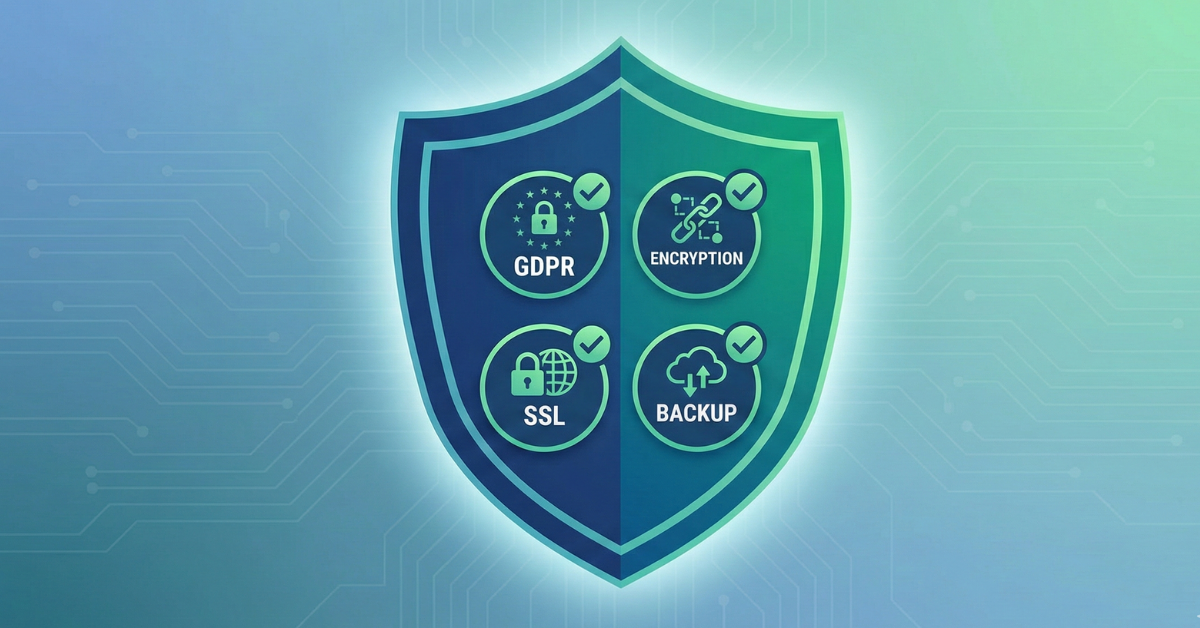
All data should be encrypted both when stored and when moving between systems. Look for TLS 1.2+ for transmission and AES-256 encryption for storage.
2. Role-Based Access Controls (RBAC)
Not everyone needs to see everything. Granular permissions ensure team members access only what they need for their role—reducing risk from both errors and internal threats.
3. Compliance Certifications
Depending on your region and industry, look for:
-
GDPR (if dealing with EU citizens)
-
CCPA/CPRA (for California residents)
-
SOC 2 Type II (enterprise-grade security practices)
Certifications mean independent verification, not just claims.
4. Audit Trails & Activity Logs
Every action in the system should be logged: who viewed what, when, and what they changed. This enables troubleshooting, training, and investigation if needed.
5. Regular Security Updates & Vulnerability Testing
The platform should undergo frequent security patches and third-party penetration testing. Ask about their update frequency and bug bounty programs.
6. Data Residency & Sovereignty Options
Some regulations require data to stay within specific geographic boundaries. Ensure your CRM provider can accommodate these requirements if needed.
7. Backup & Disaster Recovery
Ask about:
-
Backup frequency (daily? real-time?)
-
Recovery time objectives (how fast can they restore?)
-
Geographic redundancy (are backups in multiple locations?)
Questions to Ask Your CRM Provider
-
“Where is our data physically stored?”
-
“How do you handle data deletion requests?”
-
“What’s your process if a vulnerability is discovered?”
-
“Can we get compliance documentation for our audits?”
The Business Impact of Strong Security
-
Enterprise readiness – Larger clients require proof of compliance
-
Competitive advantage – Security becomes a differentiator
-
Reduced legal risk – Proper measures limit regulatory exposure
-
Team confidence – Employees trust tools that protect their work
Conclusion
Your CRM holds the lifeblood of your business—customer relationships. Protecting that data isn’t just about avoiding negatives; it’s about building a foundation for sustainable, trusted growth.
*GreenCRM24 is built with security-first principles, including encryption, role-based controls, and compliance-ready architecture.*

Comments (0)
No comments yet
Be the first to share your thoughts!
Leave a Comment